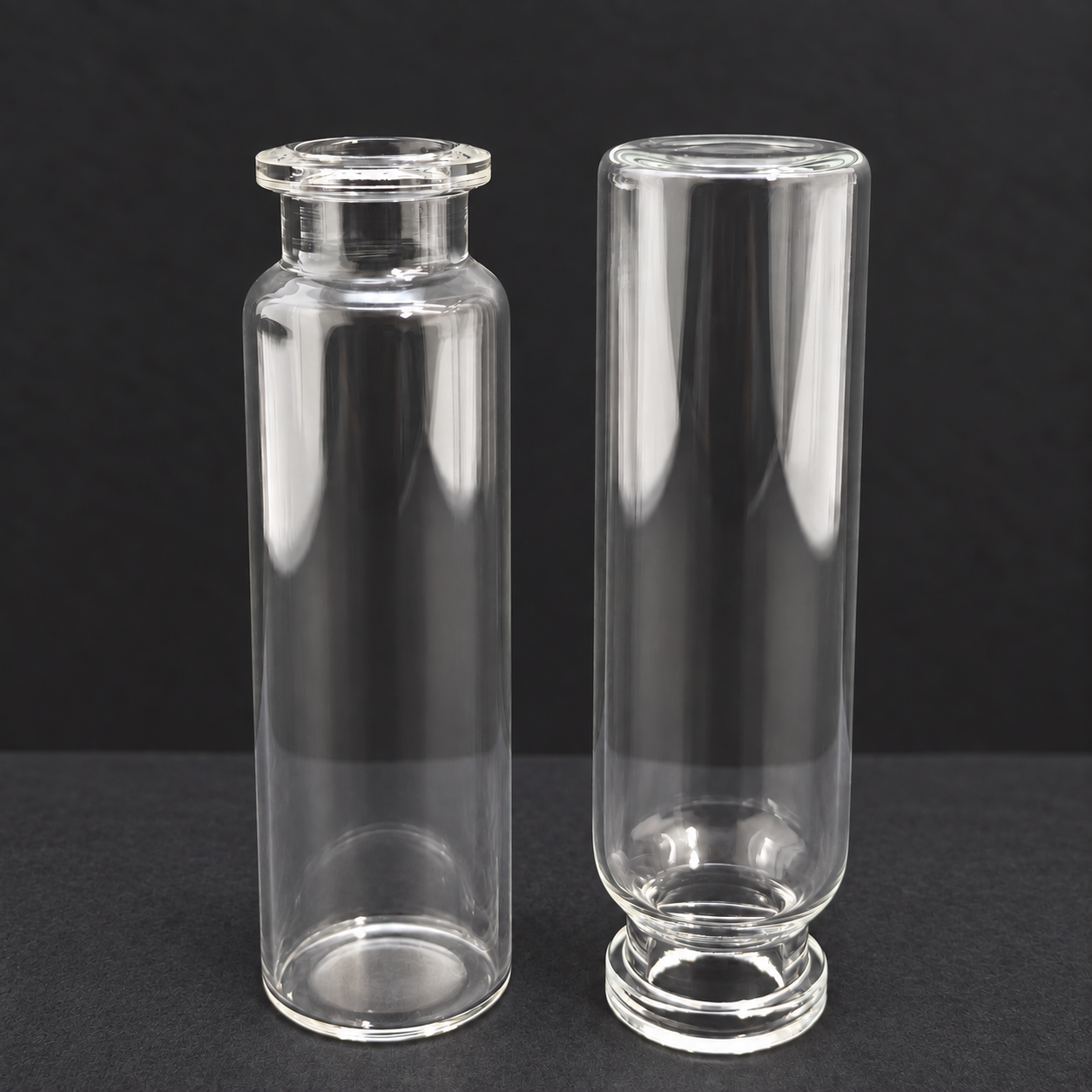
BSBGV20
20ml Glass Vial, Clear, Headspace, Crimp neck, Flat Bottom, Bevel Mouth.
BSBGV20 is a precision engineered 20 ml Crimp neck glass vial manufactured from Type I Borosilicate glass. It is designed to meet the stringent requirements of GC and GC/MS applications, ensuring excellent chemical inertness, low extractables, and consistent analytical performance. The vial supports reliable repeat injections*(T&C) and protects samples from leaching, adsorption, and contamination........... No More
Product Details/Specifications –
| Part No. | BSBGV20 |
|---|---|
| Make | BSB |
| Product Type | Crimp Type Glass Vial |
| Thermal Expansion | 49 |
| Glass Type | Type I Borosilicate glass |
| Tubing | Schott |
| Surface | Hydrophobic |
| Compatibility | Agilent |
| Vial Bottom | Flat Bottom |
| Vial Height | 75 mm |
| Vial Base | 23 mm |
| Glass Tint | Clear |
| Volume | 20 ml |
| Instrument Type | GC, GC/MS |